
procurement
Top 5 Benefits of Real-Time Spending Analytics in Procurement
February 24, 2026 · 9 min read
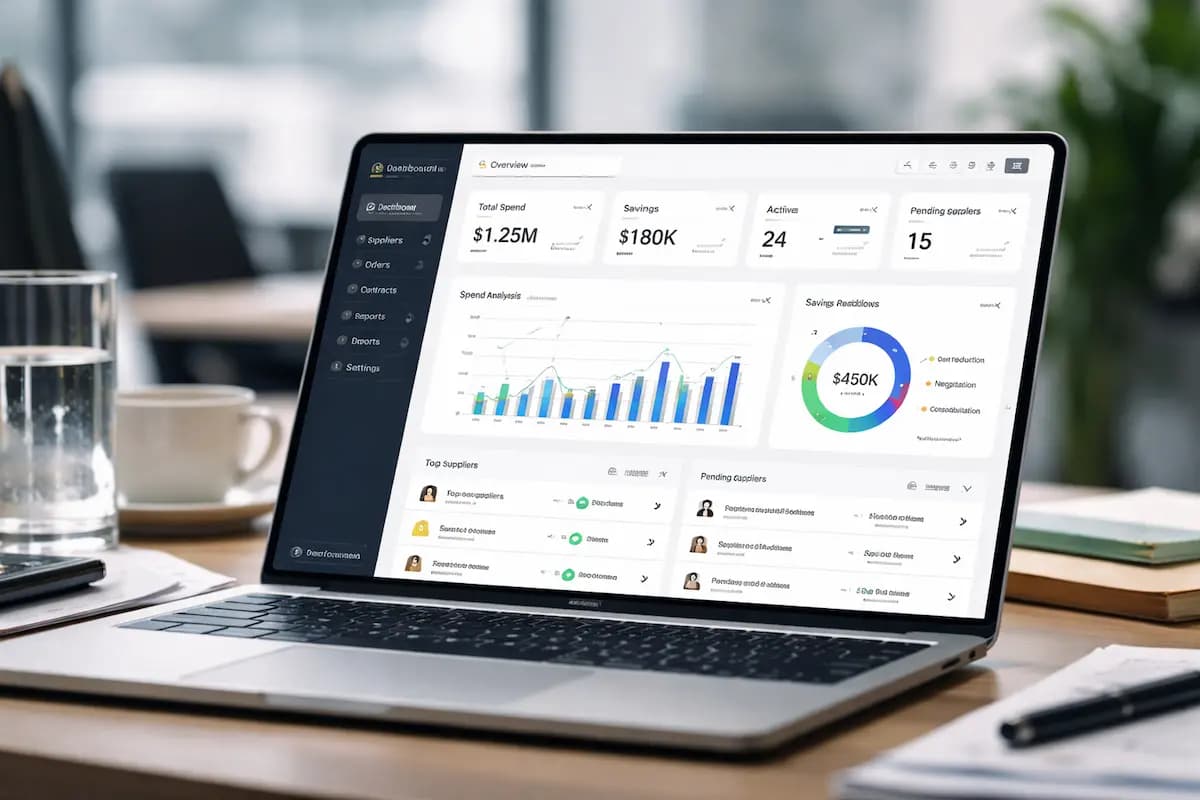
Real-time spending analytics help procurement teams control budgets, detect risks early, improve supplier outcomes, and make faster decisions with confidence.
Introduction
Procurement teams are under pressure from every direction: tighter budgets, volatile prices, faster delivery expectations, and stricter compliance requirements. In that environment, monthly reporting is not enough. By the time a static report lands in your inbox, the decision window is often already closed.
This is where real-time spending analytics changes the way procurement operates. Instead of looking backward at what happened, teams can see what is happening now: who is buying, from which supplier, at what price, under which contract, and against which budget.
With TalepNET, this visibility is not limited to finance reporting. It becomes an operational layer used daily by procurement, category managers, budget owners, and leadership. The goal is simple: make better decisions earlier, with fewer surprises at month-end.
Why Real-Time Spending Analytics Matter
Most procurement organizations are not short on data. They are short on usable timing. Data exists across ERP exports, invoice files, email approvals, and supplier spreadsheets, but it is delayed, fragmented, and hard to trust when quick action is needed.
Real-time analytics solves that timing problem. It creates a live view of procurement activity as requests are opened, approvals are processed, POs are issued, and invoices move through workflow. That continuity matters because procurement risk is rarely created by one large event; it usually builds through small, repeated signals that go unnoticed:
- Category spend drifting above plan over several weeks.
- Price variance creeping up for frequently purchased items.
- Maverick purchases increasing outside approved contracts.
- Supplier concentration rising quietly in critical categories.
If teams can see these patterns while they are forming, they can intervene with minimal disruption. If they only see them in period-end reports, corrective action is slower, more expensive, and often political.
1. Instant Visibility Into Spend, Without Waiting for Period-End
The first and most practical benefit is speed of awareness. Procurement leaders do not need a perfect quarterly deck to take action. They need reliable visibility today.
Real-time dashboards provide live insight across:
- Total spend by department, category, and supplier.
- Open requests, pending approvals, and blocked transactions.
- Contracted vs non-contracted purchasing volume.
- Unit price movement for high-frequency items.
- Budget consumption and forecasted run-rate.
This reduces the “where are we?” problem that slows many teams. Instead of pulling ad hoc reports from multiple systems, stakeholders work from one current view. It also improves alignment between procurement and finance, because both teams can reference the same numbers in the same moment.
In practice, this means fewer emergency calls at month-end, fewer manual reconciliations, and faster escalation when limits are close.
2. Faster Detection of Waste and Process Leakage
Cost leakage rarely appears as a dramatic event. It usually hides in routine transactions that look harmless in isolation:
* Repeated low-value purchases from non-preferred suppliers. * Multiple departments buying the same item at different prices. * Small off-contract orders bypassing negotiated terms. * Renewals processed late, forcing short-term expensive buys.
Static reports can show these patterns after the fact. Real-time analytics makes them visible early enough to fix while the impact is still manageable.
With TalepNET, procurement teams can monitor these leakage points continuously and set alerts around known risk signals, such as:
- Off-contract transaction ratios by category.
- Price variance thresholds for standard SKUs.
- Duplicate or near-duplicate purchase behavior.
- Sudden supplier share shifts without sourcing events.
The value here is operational discipline. Teams stop firefighting and start running controlled correction loops: detect, validate, intervene, and track outcome.
3. Better Supplier Negotiations Backed by Current Facts
Negotiation quality depends on evidence quality. Supplier discussions become more productive when procurement can bring current, defensible data to the table instead of estimates built from old snapshots.
Real-time spending analytics strengthens commercial discussions by showing:
- Actual purchase volume by period and product group.
- Demand consistency and seasonality trends.
- Current spend concentration and multi-site potential.
- Historical compliance with agreed pricing and service terms.
This creates leverage in two directions. First, buyers can negotiate better terms because volume and behavior are clear. Second, suppliers can commit more confidently when demand patterns are transparent.
It also helps internal preparation. Category managers can model scenarios quickly: consolidate volume, extend term length, adjust lot sizes, or split awards across suppliers. Negotiation strategy becomes less opinion-driven and more testable.
The result is not only lower unit cost. It is often better total value: improved lead times, clearer service commitments, and fewer disputes after award.
4. Stronger Budget Control Through Early Intervention
Budget control fails when it depends on retrospective checks. By the time overspend is visible in traditional reporting, reversing course may require project delays or urgent cuts in unrelated areas.
Real-time analytics allows organizations to shift from retrospective control to active control. Teams can define thresholds by entity, department, or category and monitor budget consumption continuously. When a trend breaches expected trajectory, alerts can trigger immediate review before hard limits are crossed.
Practical controls include:
- Category-specific warning levels (for example at 70%, 85%, 95%).
- Approval escalation when spend exceeds planned run-rate.
- Temporary holds on non-critical purchases in overrun segments.
- Mandatory justification fields for off-plan requests.
This does not mean blocking business needs. It means making trade-offs earlier, with better context. Finance and procurement can intervene in a measured way instead of applying blunt restrictions at quarter-end.
For leadership, this improves predictability. Budget deviations are surfaced as manageable signals, not last-minute surprises.
5. Strategic Planning That Reflects Reality, Not Assumptions
Over time, real-time analytics creates a high-quality operational dataset. That dataset is valuable far beyond daily monitoring. It becomes the foundation for strategy.
With reliable spend history and live trend visibility, procurement can improve decisions in areas such as:
- Category strategy prioritization based on impact and volatility.
- Supplier portfolio design and concentration risk management.
- Demand forecasting and sourcing calendar planning.
- Contract timing based on price movement patterns.
- Working capital optimization through payment behavior analysis.
This is where procurement evolves from transactional execution to strategic influence. Leadership conversations become more concrete: not “we think this category is growing,” but “this category has grown 14% in six months, with rising price variance and supplier concentration risk.”
In other words, strategy is no longer built once a year from stale inputs. It is adjusted continuously from current evidence.
Common Pitfalls to Avoid
Real-time analytics gives procurement teams powerful visibility. Turning that visibility into business impact, however, requires clear data standards, ownership and action rules. The most common pitfalls are:
Too many dashboards, not enough action
Creating many dashboards does not create value by itself. Every metric should be connected to a decision area, a clear owner and an action rule that comes into play when thresholds are reached.
Weak master data standards
If supplier names, category structures, product codes or contract links are inconsistent, analytics credibility drops quickly. Master data quality should be treated as a core part of procurement operations, not only as a reporting requirement.
Analytics disconnected from workflow
If alerts and insights do not trigger concrete steps in approvals, sourcing, ordering or supplier management, teams eventually return to old habits. Analytics should not sit outside daily operations as a report; it should become part of the decision flow.
TalepNET approaches analytics together with operational workflow. Teams can see what is happening and track which action should be taken, by whom and when, in the same system.
Making Real-Time Analytics Work in Practice
For organizations starting or scaling this capability, a phased approach is usually more effective than a full-scale rollout at once.
A practical sequence looks like this:
- Start with two or three high-impact categories.
- Standardize supplier and category master data.
- Define a small set of decision-critical KPIs.
- Assign clear owners for alert response and follow-up.
- Expand scope after behavior and governance stabilize.
This keeps adoption grounded in real usage, not reporting theater. Teams build trust in the numbers, then increase ambition.
Conclusion
Real-time spending analytics is not a reporting upgrade; it is an operating model upgrade for procurement.
Teams that work with live spend visibility can detect waste earlier, control budgets with fewer disruptions, negotiate from stronger positions, and plan with greater confidence. The competitive advantage is not just better data. It is faster, better-timed decisions.
With TalepNET, procurement teams move from delayed visibility to continuous control, and from reactive cost management to measurable, ongoing value creation.